Launch offer — valid today only

📄 Digital book in PDF · read it on your phone or print it

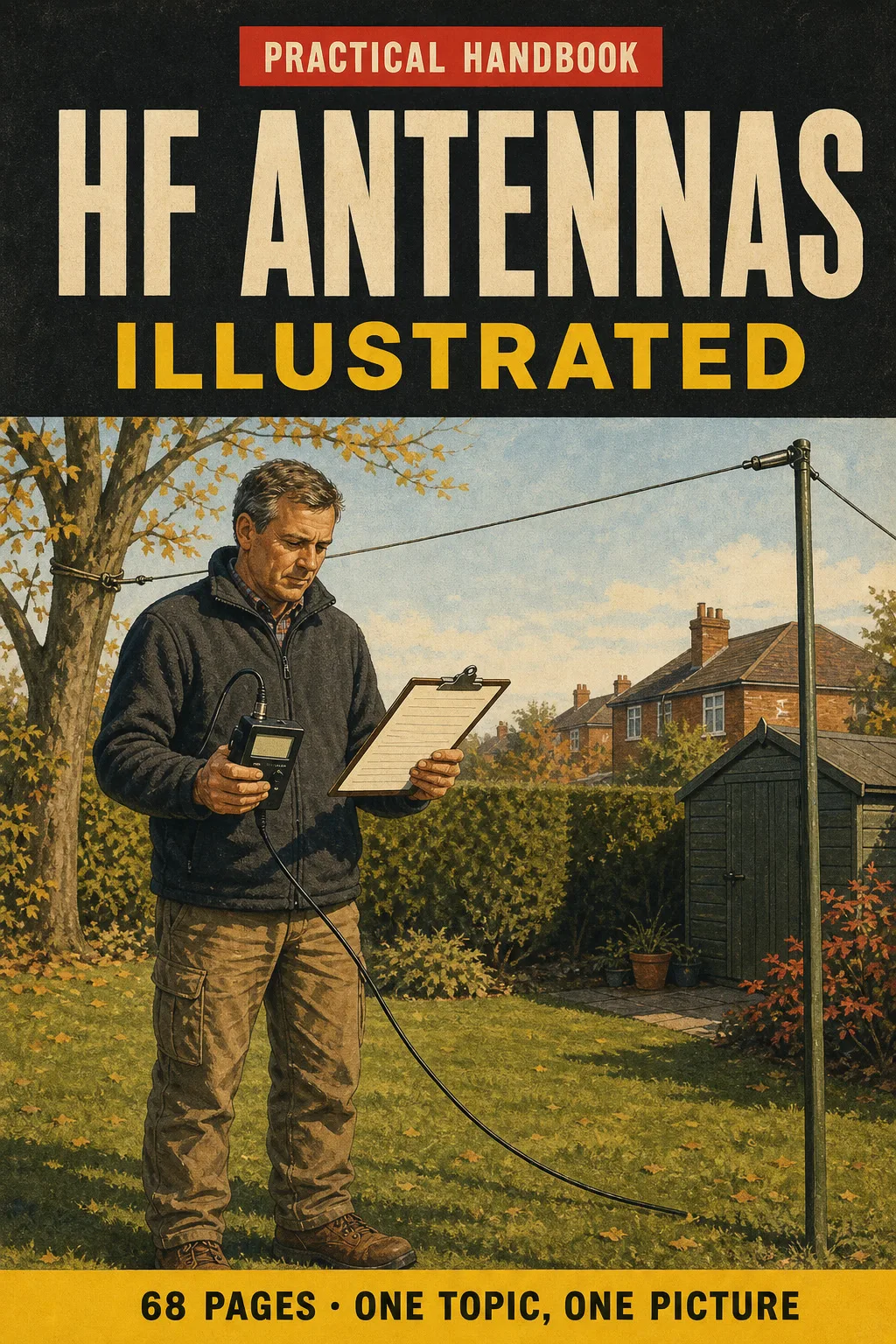
HF Antennas for a UK Garden, in Drawings Cut, Hang and Tune Each One in 6 Steps, Always in the Same Order

Dipoles and inverted-Vs, the end-fed and its 49:1 transformer, quarter-wave verticals and radials, coax and chokes, SWR and analyser sweeps, the EMF check. Every topic has its page: the drawing first, then what you need to remember. 68 illustrated pages.

GET HF ANTENNAS ILLUSTRATED

🔒 Secure checkout · PDF by email · 30-day guarantee

Every topic, its own pageEach antenna and each check drawn, with the explanation beside it
68 illustrated pages9 parts, from the tuning order to the one-page fault finder
Up-to-date sourcesOfcom EMF guidance, the RSGB HF band plan and manufacturer data sheets
PDF by emailFormat

Look Inside the Book

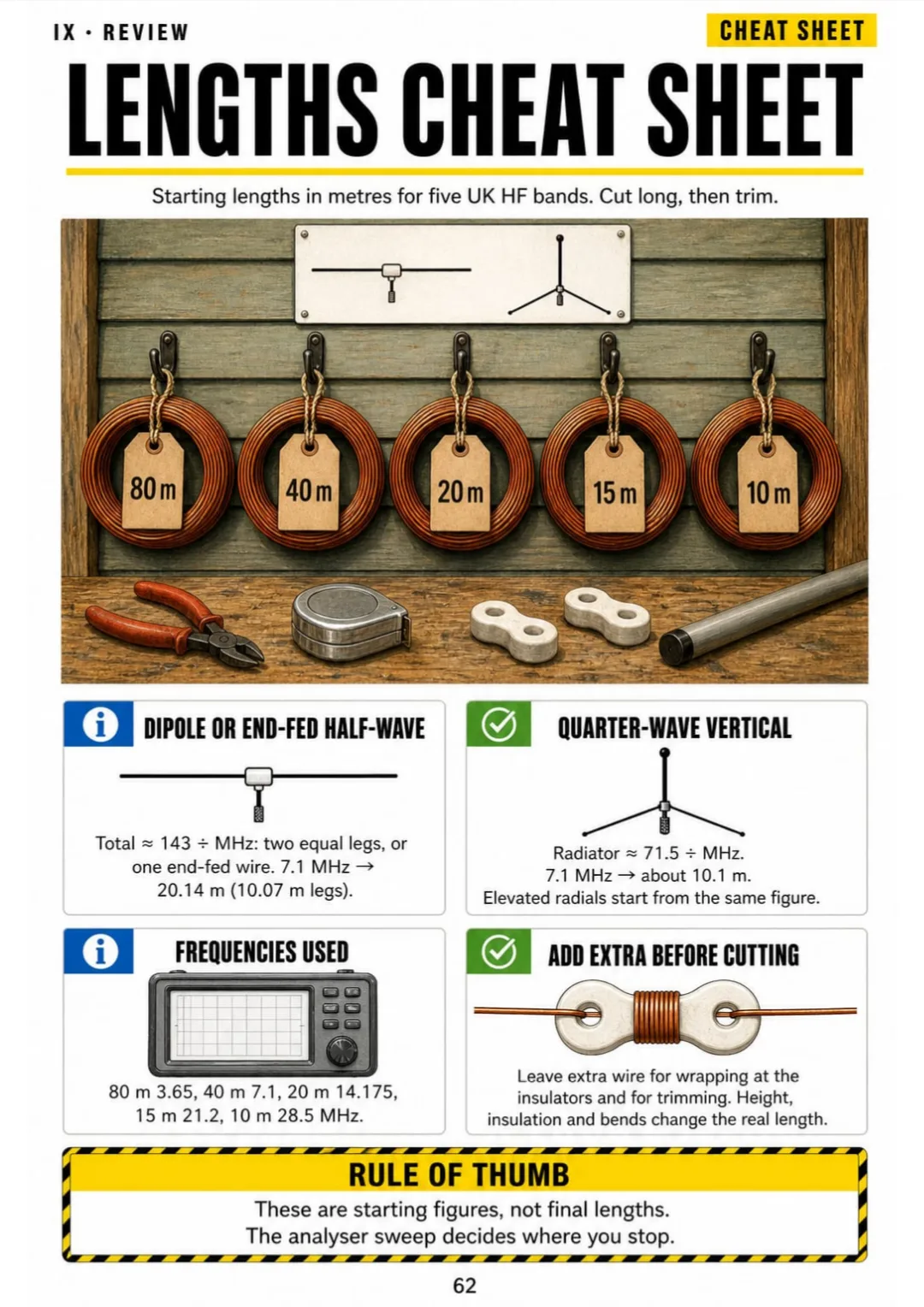
Every page has one large drawing and a box with the lengths, numbers and steps you need:

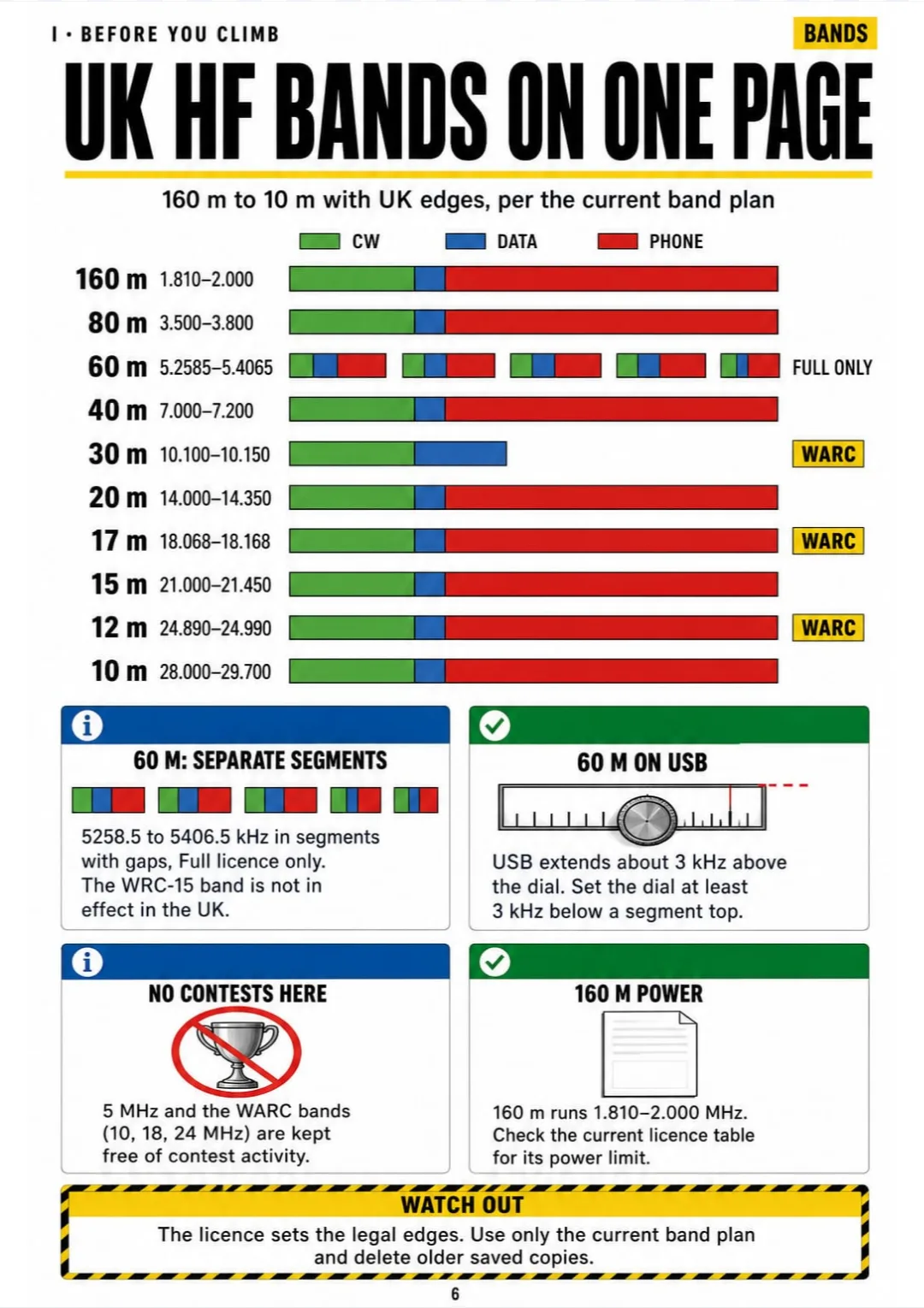
40 m is 7.000–7.200 MHz in the UK; 60 m is separate segments, Full licence only.
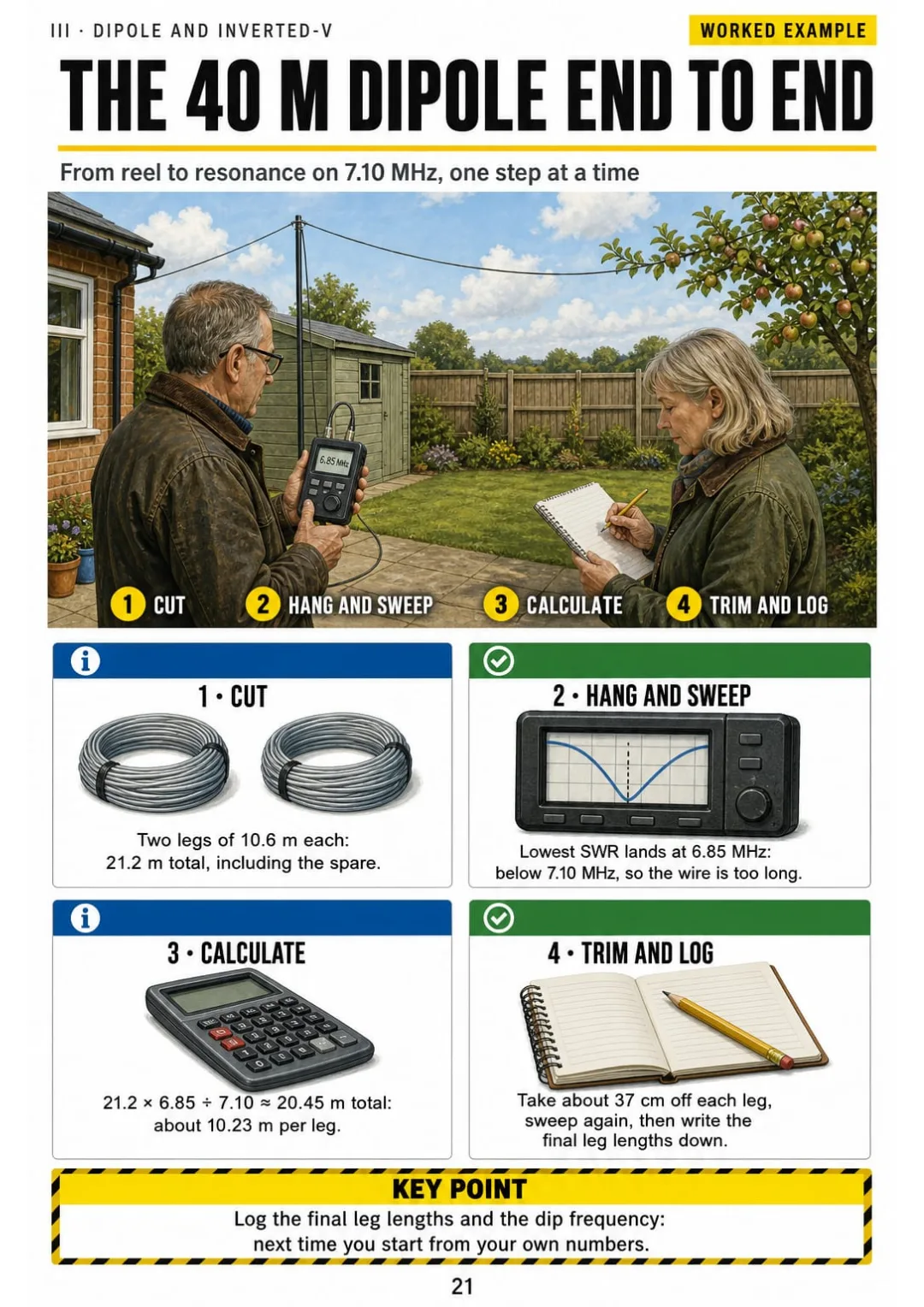
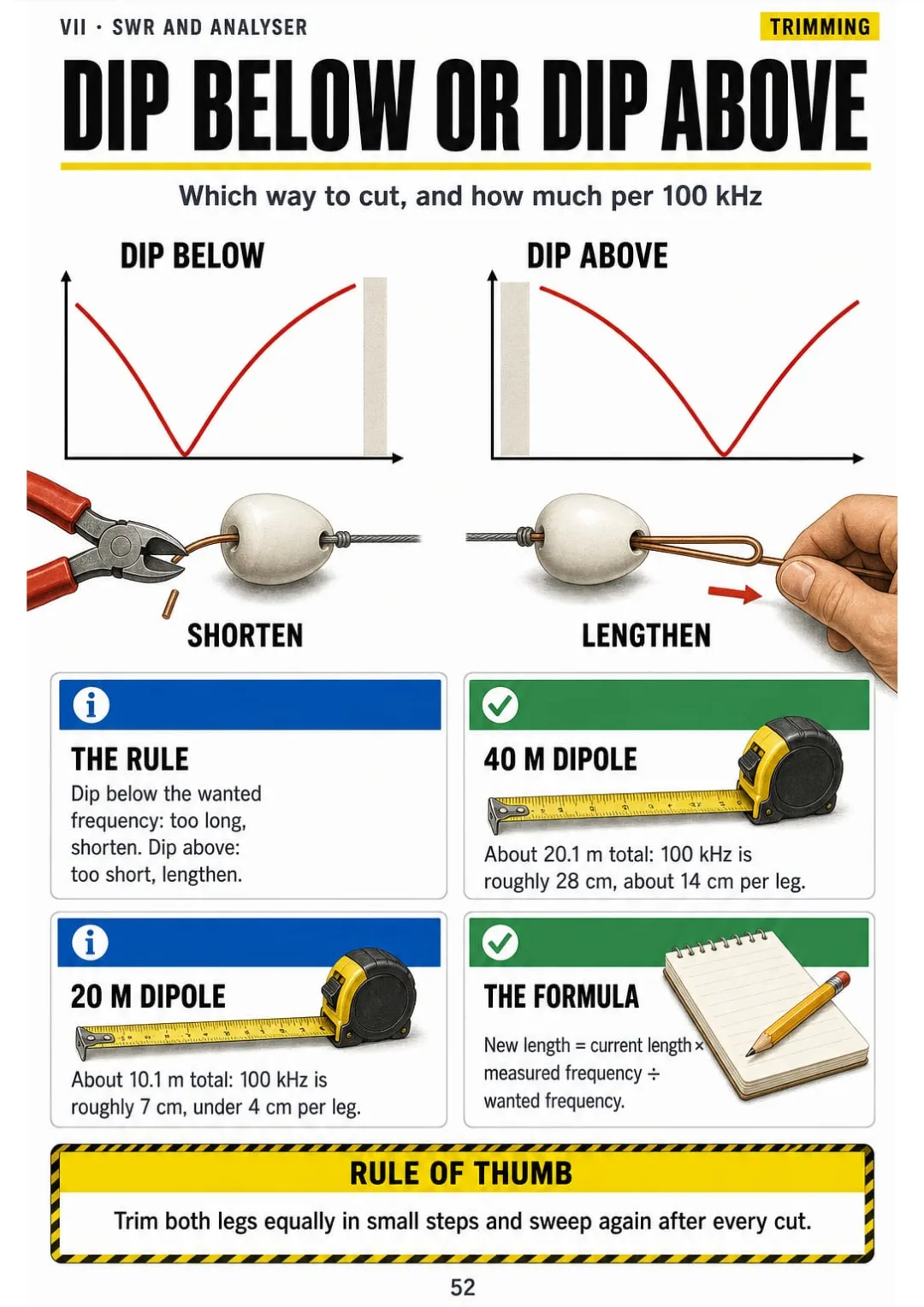
Cut 2 × 10.6 m, dip at 6.85 MHz, trim to about 10.23 m per leg.
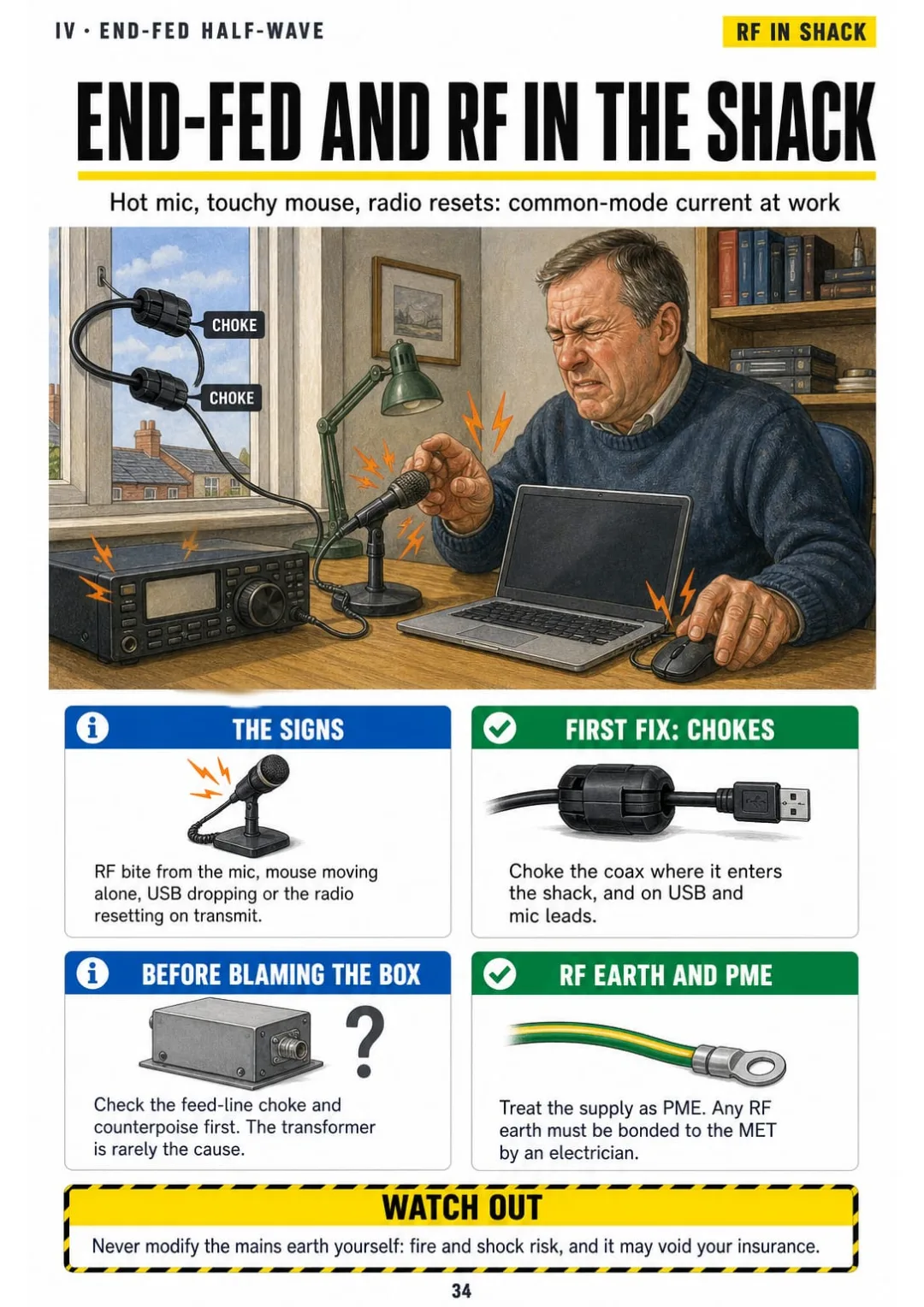
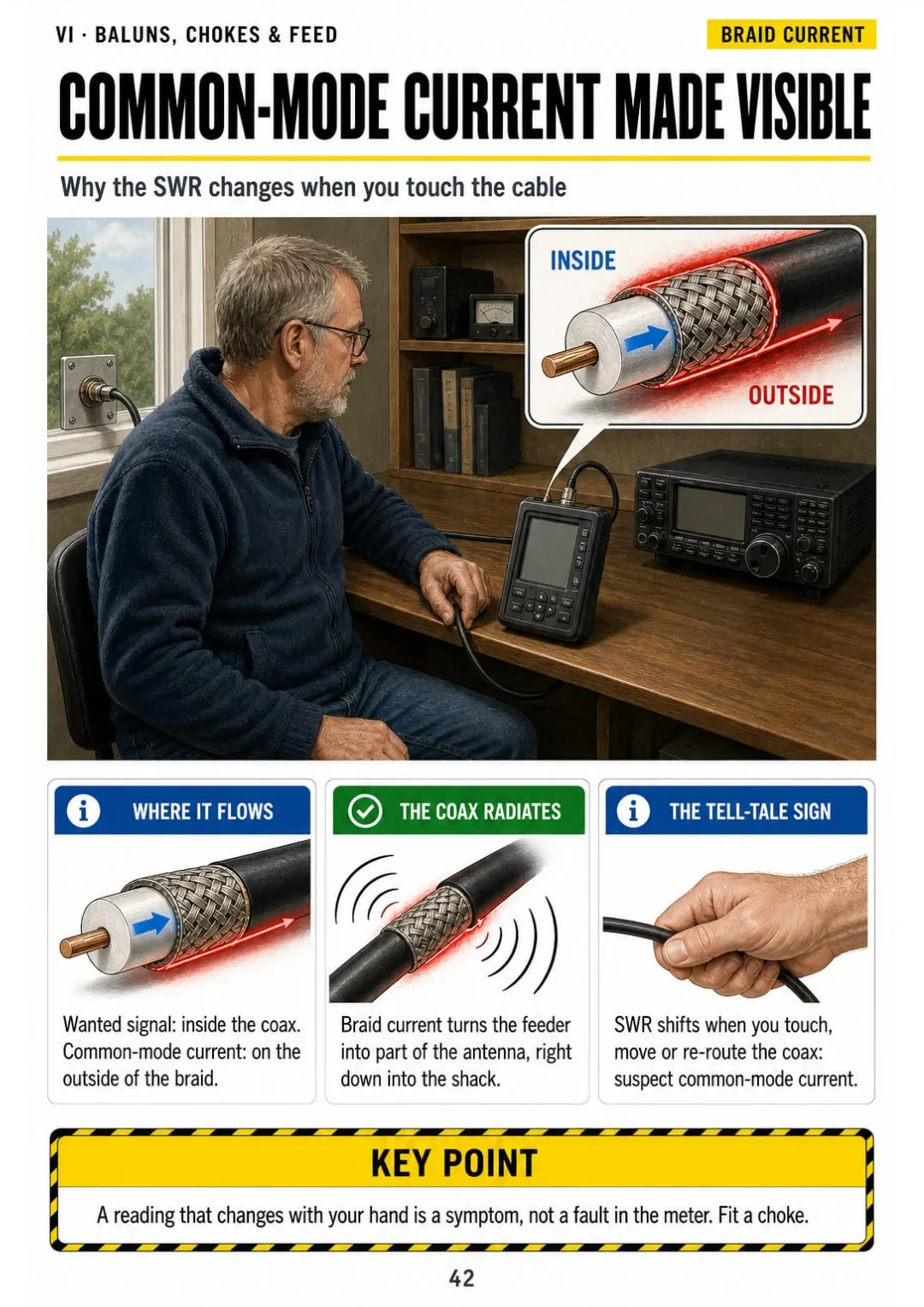
Hot mic or a resetting radio: choke the coax before you blame the transformer
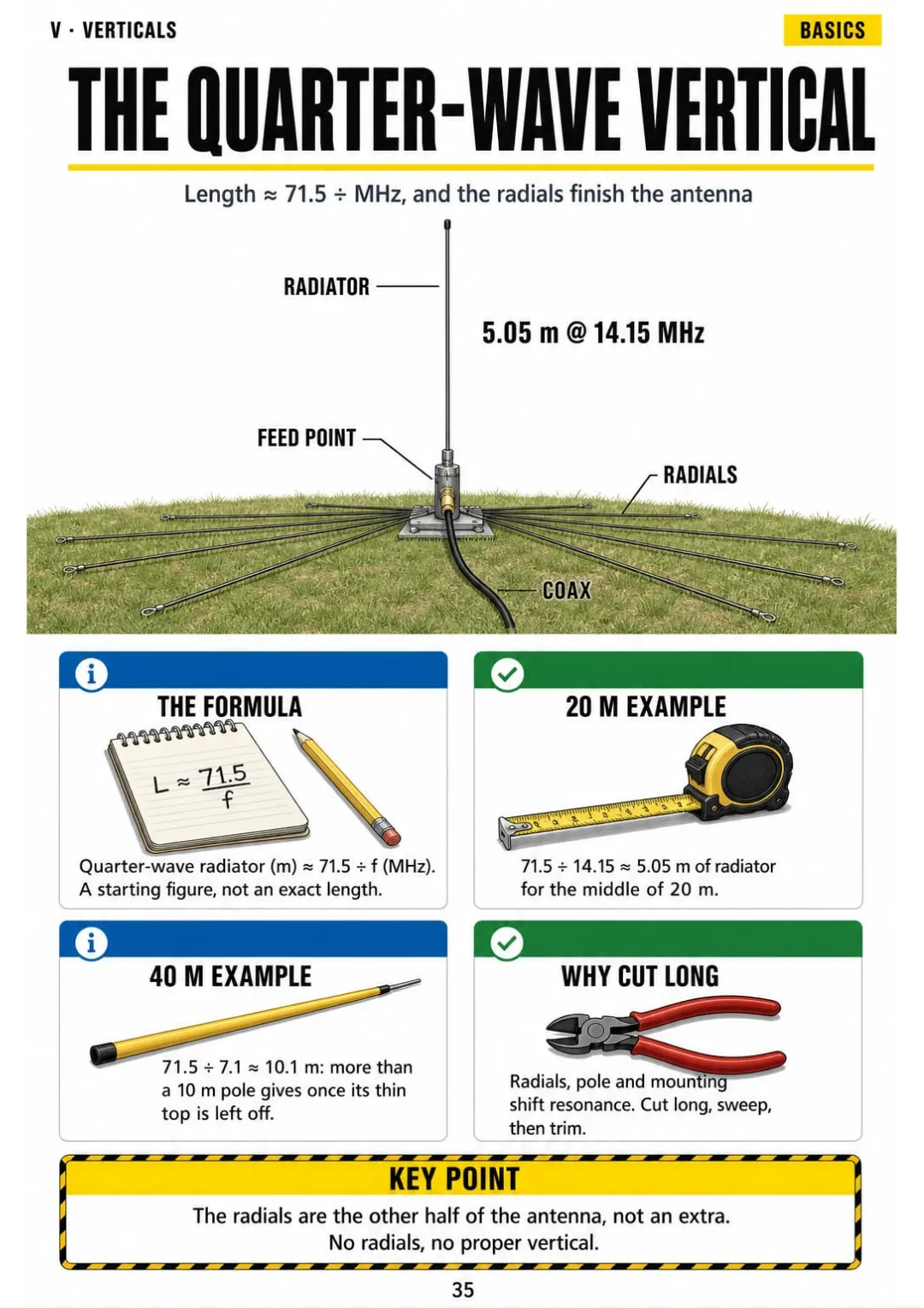
Quarter-wave vertical: 71.5 ÷ MHz → about 5.05 m on 14.15 MHz, radials included in the design.
SWR changes when you touch the cable = current on the outside of the braid
40 m: about 14 cm per leg per 100 kHz · 20 m: under 4 cm.
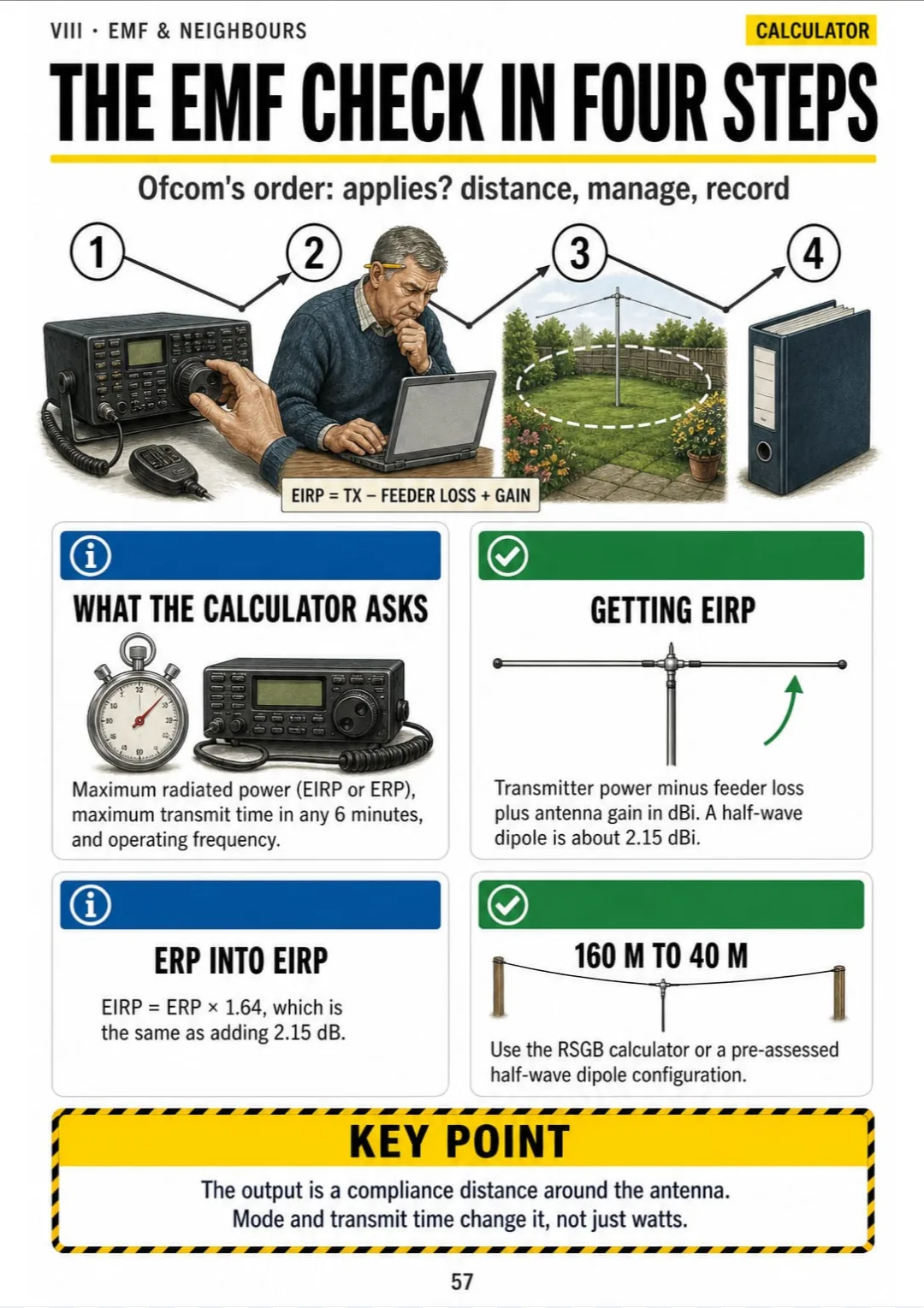
Power, feeder loss, gain, time in 6 minutes and frequency give your compliance distance
Dipole 143 ÷ MHz, vertical 71.5 ÷ MHz: 40 m starts at 20.14 m and 10.1 m.

Swipe to see more →

These are real pages from the book. The table of contents is the full one: 9 parts and 64 topics.

The Problem Isn't You. It's How It Was Explained.

You're at the bench with a 49:1 transformer in one hand and a long wire in the other, and you can't say what the little box is actually doing.

The manual covers it in paragraphs: windings, turns, impedance, a formula with a square in it. You read it, you nod, and by the weekend it's gone.

Hot mic or a resetting radio: choke the coax before you blame the transformer

In the book it's one page. The two windings drawn side by side, the 7:1 turns ratio labelled, and an arrow taking about 2,450 Ω down to about 50 Ω.

Same with the 40 m dipole cut, the quarter-wave vertical, where the choke goes, the analyser sweep and the EMF check: each one has its own page.

You see why a 7:1 winding gives 49:1, and you put the end-fed up without reaching for the manual again.

COMPARE FOR YOURSELF

The Same Topic, Two Ways to Learn It

THIS
  • The manual: line after line
  • Cutting and trimming explained only in words
  • You reach tuning day still unsure
For a half-wave dipole on the 40 m band, the approximate total length in metres may be obtained by dividing 143 by the design frequency in megahertz, after which each leg is cut somewhat longer than half that value to allow for end effects, insulator loops and subsequent adjustment. Where an initial cut of 10.6 m per leg produces a resonance at approximately 6.85 MHz, the required length is found by multiplying the existing length by the ratio of the measured to the desired frequency, yielding approximately 10.23 m per leg.
FOR THIS
  • The 40 m dipole in one drawing
  • The lengths and the dip in a box
  • You see it and you get it
Cut 2 × 10.6 m, dip at 6.85 MHz, trim to about 10.23 m per leg.
CONTENTS

Take a Look at the 9 Parts and 64 Topics

Nine parts: before you climb the ladder; wire and coax; dipoles and inverted-Vs; the end-fed; verticals and radials; baluns and chokes; SWR and the analyser; EMF and good neighbours; and the review section. 68 pages, all illustrated.

IBefore You Climb the Ladder · pp. 5-12
  1. The tuning order: measure, cut long, hang, sweep, trim, log
  2. UK HF bands on one page
  3. What your licence class lets you do
  4. Wavelength and frequency in one picture
  5. Measuring your garden before you buy wire
  6. Supports without a tower or building work
  7. Planning, neighbours and a quiet word first
  8. Safety lines you never cross
IIWire, Coax and Connectors · pp. 13-18
  1. Choosing antenna wire
  2. Insulators, rope and pulleys
  3. Coax types side by side
  4. Fitting a PL-259 that actually works
  5. Weatherproofing every joint
  6. Bringing the coax into the shack
IIIDipole and Inverted-V · pp. 19-27
  1. How a half-wave dipole works
  2. Cutting length: 143 ÷ MHz, then add extra
  3. Worked example: the 40 m dipole end to end
  4. The trim calculation
  5. Inverted-V on one pole
  6. Bent and L-shaped dipoles
  7. Height above ground
  8. Fan dipole: several bands, one coax
  9. Trap and linked dipoles
IVEnd-Fed Half-Wave · pp. 28-34
  1. Why an end-fed needs a transformer
  2. Inside the 49:1 transformer
  3. The multiband wire length
  4. Sloper, inverted-L or horizontal
  5. Counterpoise and the coax as part of the antenna
  6. Tuning an end-fed in the right order
  7. End-fed and RF in the shack
VVerticals and Radials · pp. 35-40
  1. The quarter-wave vertical
  2. Ground-mounted radials
  3. Elevated radials
  4. Vertical on a fibreglass pole
  5. Loading coils and short verticals
  6. Vertical or dipole for your garden
VIBaluns, Chokes and Feed · pp. 41-47
  1. Balun, unun and choke: three different jobs
  2. Common-mode current made visible
  3. Ferrite chokes: which mix
  4. Where the choke goes
  5. The coiled-coax choke
  6. Ladder line and the ATU
  7. Earthing and bonding at home
VIISWR and the Antenna Analyser · pp. 48-55
  1. What SWR does and does not tell you
  2. SWR into reflected power
  3. Your first analyser sweep
  4. Reading R and X
  5. Dip below the band, dip above the band
  6. Measuring at the shack end versus the feed point
  7. Velocity factor and cutting coax
  8. An SWR curve that will not move
VIIIEMF, Interference and Good Neighbours · pp. 56-61
  1. Why the EMF check is part of your licence
  2. Doing the EMF check step by step
  3. Separation distance drawn on your garden
  4. Keeping your EMF record
  5. The neighbour's TV and doorbell
  6. Noise at your end
IXReview, Checklists and Frequent Mistakes · pp. 62-68
  1. Lengths cheat sheet
  2. Pre-raise checklist
  3. Tuning-day checklist
  4. Frequent mistakes with dipoles
  5. Frequent mistakes with end-feds and verticals
  6. Frequent mistakes with EMF and RFI
  7. Fault finder in one page

One Page, One Topic, All Clear

Think of it this way:

It's Saturday, the 40 m dipole is up and the analyser shows the dip at 6.85 MHz. You need to know how much to take off before you touch the cutters.

You open the page on the 40 m dipole and there it is: both legs drawn end to end, the 10.6 m starting cut, the dip marked, and the trim to about 10.23 m per leg.

SWR changes when you touch the cable = current on the outside of the braid

Same with the end-fed's 49:1 transformer, the quarter-wave vertical and its radials, common-mode current on the coax and the EMF check: each one on its own page.

HF Antennas Illustrated is 9 parts and 64 topics, all drawn, with checklists, the frequent mistakes and a one-page fault finder at the end.

What you see drawn, you don't have to memorize.

What's Inside HF Antennas Illustrated:

Ipp. 5-12

Before You Climb the Ladder

The tuning order, UK HF bands, wavelength and frequency, measuring your garden, supports without a tower, a word with the neighbours and the safety lines you never cross.

IIpp. 13-18

Wire, Coax and Connectors

Antenna wire, insulators and pulleys, coax types side by side, a PL-259 that works, weatherproofing every joint and bringing the coax indoors.

IIIpp. 19-27

Dipole and Inverted-V

How a dipole works, 143 ÷ MHz plus extra, the 40 m dipole end to end, the trim calculation, inverted-V, bent dipoles, height, fan and trap dipoles.

IVpp. 28-34

End-Fed Half-Wave

Why an end-fed needs a transformer, inside the 49:1, the multiband length, sloper or inverted-L, counterpoise, the tuning order and RF in the shack.

Vpp. 35-40

Verticals and Radials

The quarter-wave vertical, ground-mounted and elevated radials, the fibreglass pole, loading coils and choosing a vertical or a dipole for your garden.

VIpp. 41-47

Baluns, Chokes and Feed

Balun, unun and choke, common-mode current made visible, ferrite mixes, where the choke goes, the coiled-coax choke, ladder line and earthing at home.

VIIpp. 48-55

SWR and the Antenna Analyser

What SWR tells you and what it doesn't, reflected power, your first sweep, R and X, dip below or above, velocity factor and a curve that won't move. You read the analyser screen and know which way to trim.

VIIIpp. 56-61

EMF, Interference and Good Neighbours

Why the EMF check matters, the check step by step, separation distance on your garden, your EMF record, the neighbour's TV and noise at your end.

IXpp. 62-68

Review, Checklists and Frequent Mistakes

Lengths cheat sheet, pre-raise and tuning-day checklists, frequent mistakes with dipoles, end-feds, verticals, EMF and RFI, and a one-page fault finder.

At the end of the book: Checklists, frequent mistakes, a lengths cheat sheet and a one-page fault finder.
Plus: 2 Free Books

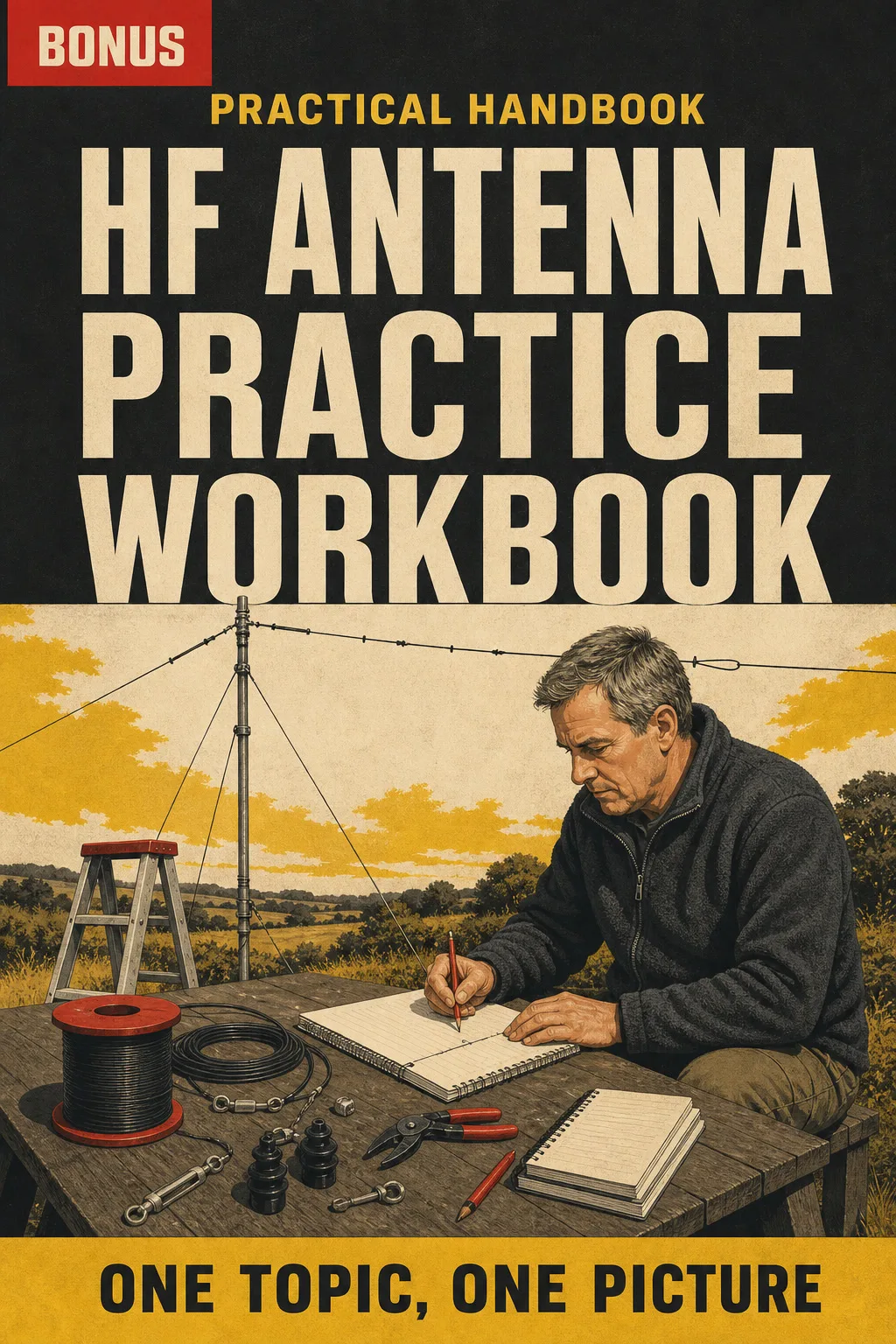
HF Antenna Practice Workbook

BONUS 1: «HF Antenna Practice Workbook»

Value on its own: US$ 17.90

Work through dipole lengths, SWR readings and analyser sweeps on paper, with the answers drawn, before you climb the ladder.

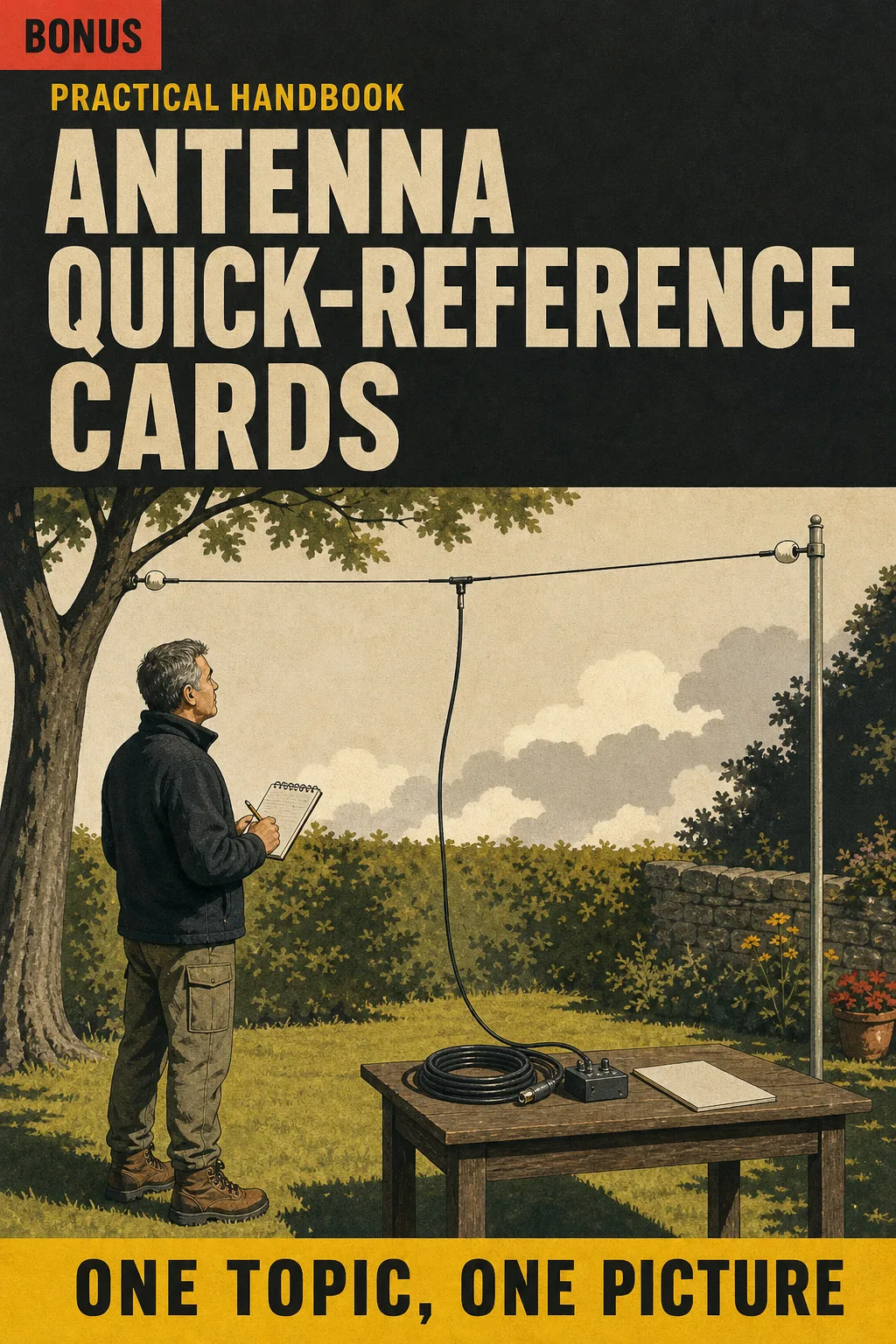
Antenna Quick-Reference Cards

BONUS 2: «Antenna Quick-Reference Cards»

Value on its own: US$ 14.90

Lengths, choke positions and check routines on printable cards to keep by the radio, so nothing has to be looked up twice.

HF Antennas Illustrated with 2 Free Books

  • HF Antennas Illustrated: 68 illustrated pagesUS$ 63
  • BONUS 1: HF Antenna Practice WorkbookUS$ 17.90
  • BONUS 2: Antenna Quick-Reference CardsUS$ 14.90
  • High-resolution PDF to printIncluded
Total value US$ 95.80
YOUR PRICE:
US$ 27
You save US$ 68.80
YES, I WANT HF ANTENNAS ILLUSTRATED FOR US$ 27

📄 This is a digital PDF book sent to your email: nothing is printed or shipped.

Secure purchaseEncrypted payment30-day guarantee

PDF by email: We email you HF Antennas Illustrated as a PDF, together with the two free books. It's a single payment: no installments, no extra charges.

Who This Book Is For

Back on HF after years away

Back on HF after years away

Everything you half-remember, back in one order: lengths, coax, chokes and the analyser, each on its own page.

Tuning day is this weekend

Tuning day is this weekend

The checklists and the 40 m worked example tell you what to measure, where to cut and what to write down before you climb the ladder.

Already on air, chasing a better match

Already on air, chasing a better match

When the SWR won't move or the coax goes hot with RF, the pages on common-mode current and the fault finder show you what to check first.

Everything You Get Today

US$ 95.80US$ 27
YES, I WANT HF ANTENNAS ILLUSTRATED FOR US$ 27

📄 This is a digital PDF book sent to your email: nothing is printed or shipped.

30DAYS
GUARANTEE

30-Day Guarantee

Try HF Antennas Illustrated for 30 days, bonus books included.

We refund everything if the file won't open, if the book isn't what you see here, if you were charged twice or if the email doesn't arrive. Just email us.

You pay once. No subscriptions.

Frequently Asked Questions

Is it for me if I've only got a small back garden?

Yes. It's written for a typical UK garden, in metres: inverted-V on one pole, end-fed, vertical on a fibreglass pole. Masts, towers and anything that needs planning permission or building work are left out.

Where does the content come from?

Figures and steps are checked against the current Ofcom EMF guidance for amateur radio, the RSGB HF band plan, manufacturer data sheets and standard RF engineering references.

Is it official material?

No. It's an independent illustrated guide, not affiliated with or endorsed by Ofcom, the RSGB or any club.

Does it replace training or help from a club?

No. It's a drawn reference to keep by the radio. Hands-on help and the manufacturer's instructions for your gear still come first.

Is it for beginners, and do I need a licence?

It starts from wavelength and frequency, so you don't need the theory first. To transmit in the UK you need an amateur radio licence from Ofcom (Foundation, Intermediate or Full). This book doesn't prepare you for the licence exams, and every exercise is written for this book.

When and how does it arrive?

The book and the 2 bonus books arrive as PDFs by email.

Do I have to pay every month?

No. It's a one-off payment.

Can I have it on paper?

Yes. Print it at home or at a print shop. The quick-reference cards are made to keep by the radio.

How does the refund work?

You have 30 days. We refund everything if the file won't open, if the book isn't what you see on this page, if you were charged twice or if the email doesn't arrive: just email us.

Before You Close This Page

No more rereading what never sticks.

The 40 m dipole trim: you see it drawn, and that's it.

You go out on tuning day knowing where everything is.

Drawings make studying faster.

The book is right below.

One-time payment: US$ 27 · Guarantee: 30 days · PDF by email

YES, I WANT HF ANTENNAS ILLUSTRATED FOR US$ 27

📄 This is a digital PDF book sent to your email: nothing is printed or shipped.